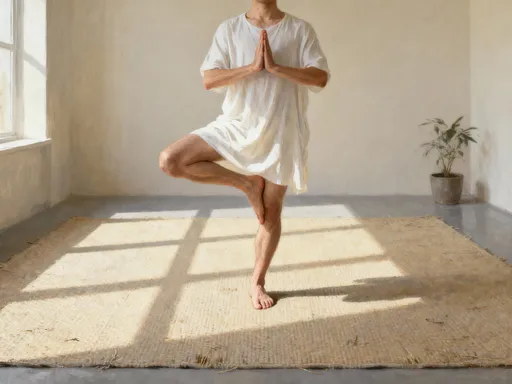
How I Keep My Body in Balance with Simple Qigong Moves
For years, I struggled with low energy and constant tension—until I discovered qigong. This ancient practice changed how I maintain my body daily. It’s not about intense workouts or strict diets. Instead, it’s gentle, natural, and deeply effective. I started with just five minutes a day and noticed real shifts in my stamina, focus, and overall well-being. If you’re looking for a sustainable way to support your body’s health, this is worth trying.
The Hidden Struggle: Why Modern Life Wears Out the Body
Many women in their 30s, 40s, and 50s find themselves exhausted despite getting enough sleep. The fatigue isn’t always from overwork alone—it often comes from a deeper imbalance. Modern life demands constant attention: managing households, supporting families, meeting work deadlines, and staying socially connected. These responsibilities rarely stop, and the body pays the price over time. Sitting for long hours, emotional stress, and irregular routines disrupt the body’s natural rhythms. Even without a diagnosed condition, people begin to feel stiffness in the morning, tightness in the shoulders, or a persistent low-grade tiredness that coffee can’t fix.
What’s often overlooked is how these daily habits affect the body’s internal flow. Traditional health systems recognize that physical well-being depends not just on muscles and bones, but on the smooth circulation of vital energy. When this flow is blocked or sluggish, symptoms appear gradually. You might not feel sick, but you’re not truly thriving either. This state—often called “suboptimal health”—is common among busy women who prioritize others’ needs over their own. The body sends quiet signals: slower recovery after activity, less resilience to stress, or difficulty staying focused. These are not signs of aging to accept passively. They are invitations to restore balance.
Qigong offers a gentle way to respond. Unlike aggressive fitness routines that can add strain, qigong works with the body’s natural design. It doesn’t require strength or flexibility. Instead, it uses slow, intentional movements combined with mindful breathing to reawaken the body’s self-regulating systems. Practitioners often describe it as “tuning up” the body, like adjusting an instrument so it plays in harmony. Over time, this practice helps dissolve tension, improve circulation, and restore a sense of calm vitality. It’s not a cure-all, but a daily act of care that supports long-term wellness.
What Exactly Is Qigong? (And Why It’s Not Just “Slow Exercise”)
Qigong (pronounced “chee-gong”) is a mind-body practice that combines coordinated breathing, gentle movement, and focused intention. The word itself comes from Chinese: “qi” means vital energy, and “gong” means cultivation or skill. Together, qigong means “cultivating energy.” This practice has been used for thousands of years in traditional Chinese medicine as a way to maintain health, prevent illness, and support emotional balance. It is not a religious practice, nor is it mystical. It is a practical system grounded in the observation of how the body responds to rhythm, breath, and awareness.
One common misconception is that qigong is just slow exercise or a form of stretching. While it involves movement, its purpose goes beyond physical flexibility. The goal is to harmonize the body’s internal environment. Each motion is paired with a breath pattern and a mental focus, creating a triad of physical, respiratory, and mental coordination. This integration is what makes qigong uniquely effective. For example, raising the arms slowly while inhaling and imagining energy rising through the body activates both the nervous system and the circulatory system in a calming way. It’s not about how high you lift, but how attentively you move.
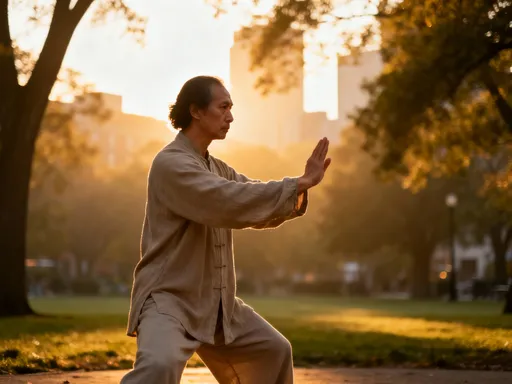
Qigong is sometimes compared to yoga or tai chi, and while there are similarities, each has its own emphasis. Yoga often focuses on postures and flexibility, tai chi on martial application and flowing sequences, while qigong prioritizes energy regulation and internal awareness. Some qigong forms are stationary; others involve gentle stepping or swaying. What unites them is the principle of effortless effort—moving with ease, not force. This makes it especially suitable for women who may have joint sensitivities, low energy, or limited mobility. It meets you where you are, without demanding performance.
Why Your Body Actually Needs Energy Flow, Not Just Strength
Modern fitness culture often emphasizes strength, endurance, and calorie burning. While these are valuable, they don’t address a quieter but equally important need: the body’s internal energy flow. Think of your body like a river system. When water flows freely, it brings nutrients, removes waste, and supports life along its banks. But when the flow is blocked—by debris, drought, or stagnation—everything downstream suffers. The same principle applies to the body’s vital energy. When qi moves smoothly, cells receive what they need, organs function efficiently, and the mind feels clear. When it’s blocked, fatigue, discomfort, and slow healing can follow.
This concept is not metaphorical in traditional health systems. It is based on centuries of observation and clinical practice. For instance, many women report chronic shoulder tension, which is often linked to stress and shallow breathing. From a qigong perspective, this tightness isn’t just a muscle problem—it’s a sign of stagnant energy in the upper body. By using slow arm movements and deep diaphragmatic breathing, you can help release this stagnation. The physical sensation of relief is real, but so is the internal shift: improved circulation, reduced nervous system activation, and better oxygen delivery to tissues.
Another example is morning stiffness. Many women wake up feeling tight, especially in the lower back or hips. This is not inevitable with age. It can result from poor overnight circulation and mental tension carried into sleep. A short qigong routine before bed or upon waking helps reset the body’s rhythm. Gentle spinal waves or pelvic tilts, done with awareness, encourage fluid movement in the joints and relaxation in the connective tissues. Over time, these small actions support joint health, reduce inflammation, and improve mobility. The body begins to recover more easily, not because of intense effort, but because it’s functioning in alignment with its natural design.
My Go-To Morning Routine: Three Simple Movements That Make a Difference
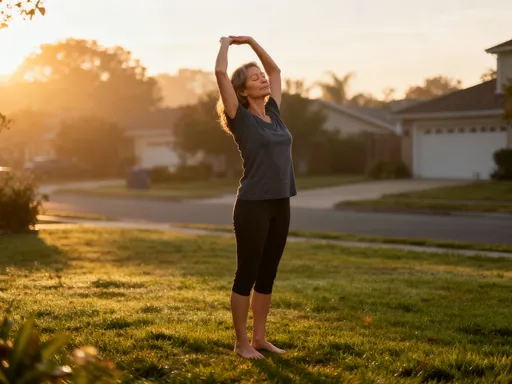
My daily qigong practice takes less than ten minutes, yet it sets the tone for my entire day. I do it first thing in the morning, before checking my phone or making coffee. The space I need is small—just enough room to stand and stretch my arms. I wear comfortable clothes and stand barefoot on a rug. The key is consistency, not duration. Even on busy mornings, I commit to three foundational movements: Lifting the Sky, Separating Heaven and Earth, and Swinging Arms. Each one targets a different aspect of energy flow and body awareness.
The first movement, Lifting the Sky, begins with feet shoulder-width apart. I inhale slowly as I raise my hands in front of me, palms up, then continue lifting them overhead as if gently pushing the sky upward. At the same time, I imagine energy rising from my feet through my body and into my hands. As I exhale, I lower my arms back down, palms turning downward, visualizing energy descending and grounding through my feet. I repeat this 6 to 9 times. This movement stimulates the central channel of the body, improves posture, and creates a sense of upward lift and clarity.
The second movement, Separating Heaven and Earth, builds on the first. As I inhale, my left hand rises overhead, palm facing up, while my right hand lowers to my lower abdomen, palm down. I imagine drawing energy from the earth with my lower hand and receiving it from the sky with the upper hand. On the exhale, I switch sides: right hand rises, left hand lowers. This cross-pattern activates both sides of the body and supports internal balance. It also gently twists the spine, improving digestion and relieving tension in the ribs and diaphragm. I repeat this 6 times per side, moving slowly and breathing deeply.
The third movement, Swinging Arms, is wonderfully simple. I let my arms hang loosely and begin to sway my torso gently from side to side, allowing my arms to swing freely like pendulums. I keep my knees soft and my breath natural. As I move, I focus on relaxation—letting go of tightness in the shoulders, neck, and jaw. This movement promotes circulation, releases stored tension, and calms the nervous system. After just a few minutes, I feel more present and less reactive to the day’s demands. These three movements, done together, create a mini-reset for both body and mind.
How to Practice Without “Doing It Wrong” – Common Mistakes to Avoid
One of the most freeing things about qigong is that there is no single “right” way to do it. The goal is not perfect form, but mindful presence. Still, certain habits can reduce its effectiveness or even cause discomfort. The most common mistake is trying too hard. Some people tense their muscles, hold their breath, or rush through the movements as if completing a task. This defeats the purpose. Qigong is not about exertion; it’s about ease. The body responds best when movements are soft, breath is smooth, and attention is gentle.
Another frequent error is neglecting the breath. Breathing in qigong is not forced or exaggerated. It should be natural and relaxed, ideally diaphragmatic—meaning the lower belly expands on the inhale and gently contracts on the exhale. When breath and movement are synchronized, the nervous system shifts from “fight or flight” to “rest and digest.” This shift is where healing begins. If you find yourself holding your breath or breathing shallowly, pause and reset. Place one hand on your belly and take a few slow breaths before continuing.
Impatience is another obstacle. Many people expect immediate results and become discouraged when changes don’t appear overnight. But qigong works cumulatively, like saving small amounts of money over time. Even three minutes a day can make a difference if done consistently. The key is regularity, not duration. It’s better to practice for three minutes every day than for twenty minutes once a week. Start where you are. If standing is difficult, you can do seated versions of these movements. If your mind wanders, gently bring it back without judgment. This is not a performance—it’s a practice of self-care.
When to Expect Changes (And What “Progress” Actually Feels Like)
Changes from qigong are often subtle at first, which is why many people overlook them. You might not feel dramatically different after one session, but over time, the shifts become clear. The first signs are usually internal: better sleep, a calmer mind, or easier breathing during stressful moments. You might notice you’re less reactive to frustration, or that you wake up feeling more refreshed. These are not small victories—they are signs that your body is regaining balance.
Physical improvements follow. Many women report reduced stiffness in the neck and shoulders, improved digestion, and more stable energy throughout the day. Some notice they catch fewer colds, recover faster from exertion, or feel more grounded during emotional ups and downs. These benefits are not guaranteed, but they are common among consistent practitioners. The body begins to function more efficiently because its internal systems—circulatory, respiratory, nervous—are working in harmony.
Tracking progress doesn’t require a journal or measurements. Simply pay attention. Notice how your body feels when you stand up after sitting, how your breath responds during a tense conversation, or how quickly you fall asleep at night. These everyday moments reveal the quiet power of qigong. It’s not about dramatic transformation; it’s about sustainable support. The practice teaches you to listen to your body, honor its signals, and respond with kindness. Over weeks and months, this awareness becomes a form of self-trust—a deep knowing that you are capable of caring for yourself in simple, meaningful ways.
Making Qigong Part of Real Life – No Mat or Studio Needed
One of the greatest strengths of qigong is its accessibility. You don’t need special clothing, equipment, or a dedicated space. You can practice while waiting for water to boil, during a work break, or even while standing in line at the store. The movements can be adapted to any environment. If you’re at a desk, try seated versions of Lifting the Sky or gentle spinal rolls. If you’re at home, stand in your kitchen or living room for a few minutes of Swinging Arms. The practice fits into life, rather than requiring life to fit around it.
This flexibility makes it sustainable. Many wellness routines fail because they demand too much time or effort. Qigong succeeds because it asks for little and gives much. It doesn’t replace medical care, but it complements it. It doesn’t require you to be young or athletic. It meets you as you are—tired, busy, or overwhelmed—and offers a way to reset. Over time, these small moments add up to a stronger foundation of health.
The real power of qigong lies in its simplicity. It reminds us that body maintenance doesn’t have to be complicated. You don’t need extreme diets, intense workouts, or expensive supplements. What you need is consistency, awareness, and a willingness to show up for yourself. By dedicating just a few minutes each day to gentle movement and mindful breathing, you give your body the support it needs to thrive. This is not a trend or a quick fix. It’s a lifelong practice of balance, resilience, and quiet strength.
Qigong isn’t a quick fix, but a lifelong tool for staying aligned, energized, and resilient. By tuning into your breath and movement, you give your body what it truly needs: balance. It’s not about being perfect—it’s about showing up gently, every day. With just a few minutes, you can build a practice that supports your health for years to come. Always consult a healthcare provider before starting new wellness routines, especially with existing conditions.