Why I Keep Coming Back to Tai Chi—And What Science Says About Routine Practice
You don’t need intense workouts to feel stronger and calmer—sometimes, slow movement does more. I started tai chi on a whim, skeptical but curious, and stuck with it simply because I felt different—more grounded, less frazzled. Over time, research began catching up to what my body already knew: regular practice changes your nervous system, balance, and focus. This is why routine matters—and how science quietly backs this ancient habit.
The Quiet Power of Movement That Doesn’t Feel Like Exercise
Tai chi stands apart from the mainstream fitness narrative that equates effort with results. In a culture where high-intensity interval training, weightlifting, and endurance sports dominate, tai chi offers a different promise: strength through stillness, energy through ease. Its movements are gentle, flowing, and often described as meditation in motion. Yet beneath this calm exterior lies a powerful physiological shift. Unlike exercises that stress the body to build resilience, tai chi strengthens by reducing strain. It does not demand exhaustion; instead, it invites awareness, alignment, and rhythmic control.
Many people approach tai chi with skepticism, especially those accustomed to measurable metrics like calories burned or heart rate spikes. The idea that slow, deliberate movements could deliver real health benefits seems counterintuitive. But this initial doubt often fades after just a few sessions. Practitioners begin to notice subtle shifts—less stiffness in the morning, a greater sense of calm during stressful moments, improved coordination when reaching for objects or navigating stairs. These changes are not imagined; they are the result of neuromuscular retraining and enhanced body awareness.
What makes tai chi particularly accessible is its low barrier to entry. It requires no special equipment, minimal space, and can be adapted for people of all ages and fitness levels. Unlike high-impact workouts that may lead to joint wear or injury over time, tai chi supports joint health and muscular endurance without compromising safety. This sustainability is key. While intense workouts may yield short-term gains, they often fail in long-term adherence. Tai chi, by contrast, thrives on consistency, making it an ideal practice for lifelong well-being.
What Exactly Is Tai Chi? A Brief Look at Its Structure and Origins
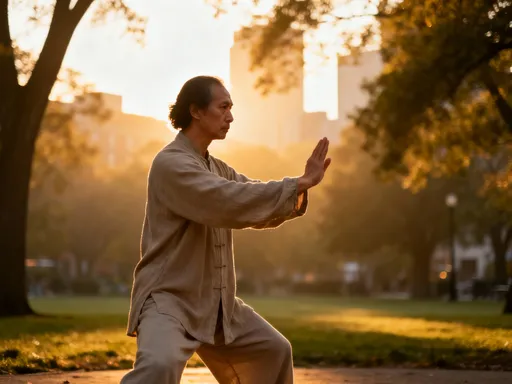
Tai chi, also known as taijiquan, originated in China as a martial art rooted in Taoist philosophy and traditional Chinese medicine. Its movements are designed to cultivate qi—often translated as vital energy or life force—through coordinated breath, intention, and fluid motion. Though it began as a form of self-defense, modern practice emphasizes health, balance, and mental clarity over combat applications. Today, it is widely taught in community centers, hospitals, and wellness programs around the world.
The structure of tai chi revolves around forms—sequences of movements performed in a continuous, flowing manner. A typical form may include 24 to 108 individual postures, such as “Wave Hands Like Clouds” or “Parting the Horse’s Mane.” Each movement transitions smoothly into the next, creating a dance-like rhythm that engages both mind and body. The emphasis is not on speed or strength but on precision, alignment, and internal focus. Practitioners are encouraged to move with intention, paying close attention to weight distribution, breath patterns, and the sensation of energy flow.
Unlike performance-based physical activities, tai chi values the process over the outcome. There is no competition, no scorekeeping, and no external validation. Progress is measured internally—through increased ease of movement, deeper breathing, and a growing sense of centeredness. This intrinsic motivation supports long-term engagement, as the rewards are felt rather than displayed. Over time, the practice becomes less about learning new forms and more about deepening presence within familiar ones.
While rooted in ancient tradition, tai chi has evolved to meet contemporary health needs. It is no longer confined to secluded gardens or martial arts schools. Instead, it has found a place in clinical settings, where it is used to support recovery from chronic conditions, improve mobility in older adults, and reduce symptoms of anxiety and depression. This integration into modern healthcare reflects its adaptability and enduring relevance.
Why Routine Regularity Matters More Than Duration or Intensity
One of the most compelling aspects of tai chi is that its benefits do not depend on long or intense sessions. Research consistently shows that even brief, daily practice—just 10 to 15 minutes—can produce measurable improvements in balance, mood, and cognitive function. What matters most is not how long you practice, but how often. This principle of consistency over duration aligns with fundamental concepts in neuroscience, particularly neuroplasticity and motor learning.
Neuroplasticity refers to the brain’s ability to reorganize itself by forming new neural connections throughout life. When tai chi is practiced regularly, the brain begins to map the movements more efficiently, improving coordination and reducing the cognitive load required to perform them. Over time, this leads to smoother, more automatic motion—a sign that the nervous system has adapted. Similarly, motor learning theory suggests that repeated, mindful repetition strengthens muscle memory and enhances proprioception, the body’s sense of its position in space.
Irregular practice, on the other hand, disrupts this process. Sporadic sessions may offer temporary relaxation, but they do not allow the nervous system to consolidate gains. Just as brushing your teeth once a month won’t prevent cavities, practicing tai chi only occasionally won’t yield lasting benefits. The cumulative effect of daily engagement is what creates transformation. This is why experts recommend integrating tai chi into daily routines, much like stretching or deep breathing.
The beauty of this approach is its realism. Many people abandon fitness regimens because they require too much time or effort. Tai chi sidesteps this obstacle by being both flexible and forgiving. A full form can be practiced in 20 minutes, but even a few postures done mindfully upon waking or before bed can sustain momentum. The goal is not perfection but continuity—showing up, even briefly, with intention.
The Science Behind the Calm: How Tai Chi Regulates the Nervous System
One of the most well-documented effects of tai chi is its ability to shift the body from a state of stress to one of calm. This transformation occurs through activation of the parasympathetic nervous system, the branch responsible for rest, digestion, and recovery. Unlike the sympathetic nervous system, which triggers the “fight-or-flight” response, the parasympathetic system promotes relaxation and internal balance. Tai chi’s slow, rhythmic movements—paired with deep, diaphragmatic breathing—act as a natural switch, signaling the body to downregulate stress hormones and restore equilibrium.
Scientific studies have shown that regular tai chi practice improves heart rate variability (HRV), a key marker of autonomic nervous system health. Higher HRV is associated with greater resilience to stress, better emotional regulation, and improved cardiovascular function. In one meta-analysis published in the journal Frontiers in Psychology, researchers found that tai chi significantly increased HRV across multiple studies, particularly in middle-aged and older adults. These findings suggest that tai chi does not merely provide temporary relief but fosters lasting improvements in the body’s ability to manage stress.
Cortisol, often referred to as the “stress hormone,” also decreases with consistent tai chi practice. Elevated cortisol levels over time are linked to a range of health issues, including insomnia, weight gain, and weakened immunity. By lowering cortisol, tai chi helps protect against these downstream effects. A study conducted at Harvard Medical School observed that participants who practiced tai chi for 12 weeks reported lower perceived stress and showed measurable reductions in cortisol compared to a control group.
It is important to note that tai chi is not a cure for anxiety or depression, nor should it replace professional treatment when needed. However, it serves as a valuable behavioral tool for managing everyday stress. Its effects are gradual and cumulative, building resilience over time rather than offering immediate fixes. For many, this quiet, consistent practice becomes a cornerstone of emotional stability in an unpredictable world.
Physical Gains You Can Actually Measure: Balance, Strength, and Joint Mobility
Beyond its mental and emotional benefits, tai chi delivers tangible physical improvements that can be observed and measured. One of the most significant is enhanced balance. As people age, balance naturally declines due to changes in muscle strength, joint flexibility, and sensory perception. This increases the risk of falls, which can lead to serious injuries. Tai chi directly addresses these risk factors by improving postural control, weight shifting, and lower-body strength.
Clinical trials have repeatedly demonstrated tai chi’s effectiveness in fall prevention. A landmark study published in the New England Journal of Medicine found that older adults who practiced tai chi three times a week for six months reduced their fall rate by nearly 50% compared to those who received standard physical therapy or participated in stretching exercises. The movements involved—such as shifting weight from one leg to the other, rotating the hips, and maintaining a low center of gravity—train the body to respond more effectively to instability.
Strength gains from tai chi are often overlooked because they do not involve lifting weights or resistance bands. Instead, strength is built through isometric contractions—muscle engagement without visible movement. Many tai chi postures require holding a slight squat or extending the arms for extended periods, which activates the quadriceps, glutes, and core muscles. Over time, this leads to improved muscular endurance and joint stability, particularly in the knees and ankles.
Joint mobility is another area where tai chi excels. The full-range, circular motions encourage smooth articulation of the shoulders, hips, and spine. Unlike repetitive, linear exercises that can create muscular imbalances, tai chi promotes balanced, three-dimensional movement. This makes it especially beneficial for individuals with arthritis or joint stiffness. Physical therapists often incorporate tai chi principles into rehabilitation programs because of its ability to improve range of motion without causing strain.
Building the Habit: Simple Ways to Weave Tai Chi Into Daily Life
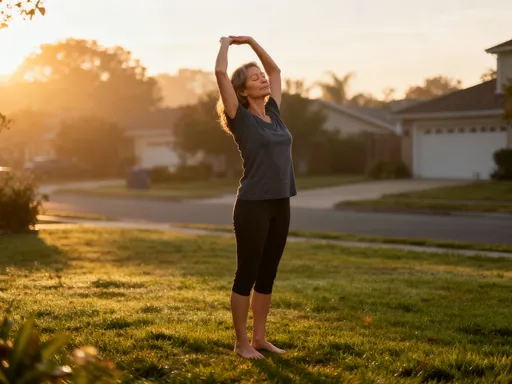
One of the greatest advantages of tai chi is its adaptability. It does not require a gym membership, special clothing, or even a large space. A quiet corner of a living room, a patch of grass in the backyard, or even a workspace during a break can serve as a practice area. The key to making tai chi a lasting habit is integration—finding small, consistent ways to include it in daily routines.
Many people find success by pairing tai chi with an existing habit. For example, doing a short sequence after brushing teeth in the morning or before bedtime creates a natural cue. Others use it as a transition between work and home life, practicing a few movements to shed the mental load of the day. Workplace wellness programs have begun to include micro-sessions of tai chi, recognizing that even five minutes of mindful movement can improve focus and reduce tension.
For beginners, starting with a single movement—such as “Closing and Opening the Hands” or “Shifting Weight Side to Side”—can be more effective than attempting a full form. Mastering one posture builds confidence and familiarity. Reputable online resources offer guided instruction, allowing learners to progress at their own pace. The goal is not to perform perfectly but to engage mindfully, noticing how the body feels with each repetition.
Patience is essential in the early stages. Progress in tai chi is often imperceptible at first. There may be no dramatic changes in strength or flexibility immediately, but subtle shifts in coordination, breathing, and mental clarity will emerge over time. Practitioners are encouraged to approach the practice with curiosity rather than judgment, allowing themselves to learn without pressure. This non-competitive mindset supports long-term adherence and deepens the therapeutic value of the experience.
Beyond the Body: Mental Clarity, Focus, and Emotional Resilience
The benefits of tai chi extend far beyond physical health. Its meditative nature fosters what researchers call “moving mindfulness”—a state of present-moment awareness achieved through motion. Unlike seated meditation, which can feel challenging for those with restless minds, tai chi provides a gentle entry point by anchoring attention to movement and breath. This makes it particularly accessible for individuals who struggle with stillness or find traditional meditation difficult.
Regular practice has been linked to reduced mind-wandering and improved attention regulation. A study from the University of Illinois found that older adults who practiced tai chi for 16 weeks showed significant gains in executive function, including working memory, cognitive flexibility, and inhibitory control. These cognitive improvements are likely due to the dual demands of tai chi: coordinating complex movements while maintaining internal focus. This constant integration of body and mind strengthens neural pathways associated with concentration and self-regulation.
Emotional resilience is another profound outcome of sustained practice. As individuals become more attuned to their bodies, they also develop greater self-awareness. They begin to recognize tension patterns, emotional triggers, and habitual reactions. This awareness creates space—between stimulus and response—where choice becomes possible. Over time, practitioners report feeling less reactive, more centered, and better equipped to handle life’s challenges.
While tai chi is not a substitute for therapy or medication in cases of clinical anxiety or depression, it complements other treatments by promoting a sense of agency and inner stability. The routine itself becomes a form of self-care—a daily commitment to showing up for oneself. In a world filled with distractions and demands, this simple act of presence can be profoundly healing.
Tai chi isn’t flashy, but its power lies in repetition, rhythm, and return. Science increasingly confirms that showing up consistently—even briefly—triggers real changes in body and mind. It’s not about perfection; it’s about presence. In a world chasing quick fixes, this quiet practice offers something rare: a sustainable way to feel more like yourself.